





Susan Abulhawa
Mondoweiss / May 25, 2026
+972 Magazine is helping to publish Sally Rooney’s latest novel in Israel, a deal that undermines Israel’s cultural isolation as it continues to commit genocide in Gaza. Who does this serve ?
Five years after announcing her boycott of Israeli publishing, Sally Rooney’s latest novel Intermezzo will now appear in Hebrew for Israeli readers. But this is not a betrayal by Rooney. I want to be clear about that because I believe her to be a person of genuine integrity. The reality of this development is nonetheless insidious and troubling.
The deal was brokered by +972 Magazine and reportedly green-lit as compatible with the boycott guidelines of PACBI (Palestinian Campaign for the Academic and Cultural Boycott of Israel) and its governing body, the BNC, or Boycott, Divestment and Sanctions (BDS) National Committee.
The question is not whether the deal technically threads a needle through guidelines written in 2009 and revised in 2014. Rather, the questions are these: why did anyone working in the sphere of Palestinian liberation consider this a priority in the first place ? Why now ? Why this book and this author ? And who is served by it ?
Palestinians, especially Palestinian cultural workers, deserve answers to these questions.
The book deal was announced in May 2026, the month when Palestinians annually commemorate the Nakba – when 80 percent of the indigenous non-Jewish population was massacred or expelled from their ancestral homeland by the newly established European Jewish colony.
It is also the 31st month of a live-streamed genocide, with Gaza’s publishing infrastructure pulverized and its writers murdered in targeted killings by Israel.
Why was this the project that demanded ingenuity from a magazine whose stated mission is to document Israeli wrongs and amplify Palestinian voices? Why was the institutional energy, labour and resources of editors, lawyers, agents and brokers spent trying to deliver a celebrated Western literary novel into the language of the perpetrator state, on schedule, like any other season ?
What is the point of making sure that celebrated international writers find their way to Israelis in Hebrew, while Israel is conducting a genocide in Gaza, ethnic cleansing in Lebanon, apartheid in the West Bank and Jerusalem, occupation in Syria and wars on Iran and on free speech around the world?
The publisher’s frame
Twelve years ago, I was offered a contract by an Israeli publishing house for Mornings in Jenin and The Blue Between Sky and Water. I declined. The publisher, who by all the markers in her correspondence was a thoughtful person operating in good faith within a poisoned system, wrote back through my agent:
We at [the publishing house] share your hope for the fall of the apartheid system. Our greatest joy would be to live to see the establishment of a Palestinian state alongside the state of Israel. Since our profession concerns books, our way to help realise this dream is by trying to widen the horizon of our readers. We are constantly looking for interesting voices from the Arab and Muslim world.
I declined for many reasons, but principally because I do not accept that role for myself or my books.
I am not raw material for the self-improvement of the people whose state, with active and pervasive participation from its population, expelled my family and me, stole our homes and heritage and has been actively trying to erase my people ever since.
But if one accepts the “widen the horizon” frame – that it is right to push books across the language barrier so that Israelis can learn something – then the choice of which books to publish would carry the entire moral weight of the argument.
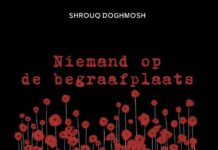
It would have to be books that confront Israeli readers with what their society is doing: Palestinian testimony from Gaza; diaries of murdered journalists; documentary work on the destruction of medical infrastructure; translations of writing by prisoners held without charge; forensic accounts of the famine; the late Palestinian poet and academic Refaat Alareer‘s work and the tribute to him, If I Must Die; the anthology Every Moment Is a Life, a short story collection from 18 writers in Gaza that I mentored and edited; or the rest of the writing that has come out of Gaza in these 31 months, written under bombardment by people who are still there or who are no longer with us.
It could be argued that the boycott could suspend itself for books that perform the work the boycott itself was meant to do – books that confront the colonizing society. But none of these was deemed worthy by +972 Magazine.
The book in question is Intermezzo, a literary novel about two Irish brothers and the slow choreography of family moving through grief and love. It is not a book that holds a mirror up to the society into whose language it is being delivered. It does not place a single Israeli reader before a single uncomfortable truth about the carnage their state and military are waging.
It is prestige literary fiction – the kind of book a national literary culture imports to feel itself participating in the global conversation.
Sally Rooney is one of the most commercially powerful literary personalities of her generation. A new novel by her is a publishing event. The whole appeal of the manoeuvre is that it punctures the isolation. That is the function of the choice.
It is a demonstration that the boycott has a backdoor and the celebrated novels of the global literary scene still arrive in Hebrew on time, preserving the cultural normalcy of the Israeli reading public in the middle of a genocide.
At a minimum, the purpose of the boycott is the denial of cultural normalcy to a state engaged in genocide and apartheid. Delivering this novel into Hebrew by an Israeli publisher at this moment does the opposite. It supplies normalcy, and now, the latest celebrated Western novel will arrive in translation on shelves in time for the season, as if Israel hadn’t just slaughtered an estimated 680,000 people in Gaza alone.
Centering the colonizer
+972 Magazine published an editorial announcing the deal and laid bare the deeper logic. The Hebrew Intermezzo, it argues, reassures Israeli readers that the Palestinian boycott is not against Jews, that the movement is principled rather than punitive. In other words, the point is to center Jewish Israeli feelings and the need for Palestinians to assuage their fears. The animating concern is not Palestinians hanging onto life by a thread, gasping for air for the whole world to see.
There is an observation in anti-colonial thought, articulated by Fanon and others, that the most insidious move available to a metropolitan solidarity movement is to organize itself around the question of how the colonial society can feel better about itself. It is a move that always presents itself as sophisticated and nuanced—a step beyond crude rejectionism. In practice, it is a move that defangs the boycott and turns liberation politics into a form of pastoral care for the perpetrator.
The Hebrew Intermezzo is precisely this move. It allows a sector of the Israeli reading public to feel that the boycott is reasonable, that it understands them, that it sees them as individuals rather than as participants in a colonial project. It allows the international solidarity ecosystem—the magazines, the literary agents, the publishing intermediaries, the NGO professionals—to feel that they are doing something difficult and principled by negotiating these arrangements. And it allows the publisher, the author’s agents, and the broader literary marketplace to claim a moral coherence they’ve not earned.
This is the inversion at the heart of the matter. An anti-colonial movement cannot be organized around the emotional comfort of the colonizer. It cannot make its central question “How do Israelis feel about us?” because the answer to that question, in any honest reading of the present, has nothing to teach us about what justice requires.
The Israeli public
Even if the case for the Hebrew Intermezzo could be reconstructed on the strongest possible ground—that the boycott should make space for cultural transmission when the work might genuinely move a reader—that case still has to contend with who the readers are. Not in caricature, but in their own words, their own polls, and in the cultural output they generate and amplify themselves.
Polling by a multitude of institutions throughout 2024 and 2025 has consistently found that a significant majority of Jewish Israelis oppose any meaningful humanitarian aid to Gaza, support the continuation of bombing and demolition campaigns, and reject the proposition that their military has done anything wrong. In repeated surveys, a clear majority of Jewish Israelis affirmed that there are “no innocents in Gaza.” Public figures who suggested otherwise—soldiers, journalists, the rare politician—are treated as traitors.
This is not a society quietly waiting for the right novel to arrive in translation. This is a society whose soldiers post selfies in the lingerie of women they have killed and with the toys of children they’ve also killed, whose dating apps fill with profile photos depicting crimes against Palestinians, whose viral social media trends mock Palestinian thirst and hunger, who film themselves rifling through the belongings of the dead and uploading the footage for likes. The cruelty is not subtext. It is not the province of a deranged fringe. It is the documented, public, popular culture of the Israeli mainstream during a genocide its public overwhelmingly supports.
The book being delivered into this reading public is not about any of this. Even the most generous theory of literary impact—that exposure to a great novel quietly remakes the reader—would require the novel to be doing something other than to render with great care the inner lives of two brothers in Dublin. The brothers in Dublin will not interrupt the soldiers’ dating profiles. They will not free a single Palestinian hostage from Israeli torture and rape dungeons, documented at every level. They will not interrupt the supply chain of weapons, diplomatic cover, the endless financial stream, or the supremacist ideological infrastructure. They will not reduce the scope of Israeli impunity, though they might enhance it.
Who is served ?
To bring it back to the question that matters most: Who does the Hebrew translation of Intermezzo serve?
It serves the Israeli publisher who acquires a marquee international title at a moment when serious international cultural workers are intent on cultural isolation of a genocidal colonial state. It serves the Israeli reading public, who get to encounter a celebrated novelist while their state continues unfathomable horror against a principally defenseless indigenous society. It serves +972 Magazine’s positioning as a sophisticated broker between worlds, indispensable precisely because it can do what cruder solidarity movements cannot. It serves the project of making BDS legible and palatable to a liberal Western readership that has always been more comfortable with boycotts in theory than with the actual social cost of boycotts in practice.
It does not serve Palestinians. It does not serve the boycott. It does not serve the isolation that the boycott exists to produce. It does not serve the families in Gaza or the hostages in Israeli jails or the writers killed in their homes or the publishing and cultural infrastructure obliterated alongside everything else.
A solidarity that cannot recognize this is not solidarity. It is a form of moral self-care for the people brokering the deal, dressed in the language of strategy. The strategy, on inspection, is what Fanon warned us about: to keep the metropole comfortable, keep the colonizer reassured, keep the conversation about how Israelis feel about us rather than about what they are doing to us.
Susan Abulhawa is a novelist, mother, friend of non-human life, conscientious steward of the earth, founder of Playgrounds for Palestine, and director of the Palestine Writes Literature Festival
