




TPC Staff
The Palestine Chronicle / September 5, 2026
Israeli occupation forces forcibly displaced over 33,000 Palestinians from three West Bank refugee camps, raising concerns of ethnic cleansing, a UN report says.
Entire camps forcibly emptied
Israeli forces forcibly displaced the entire Palestinian populations of three refugee camps in the occupied West Bank and have prevented tens of thousands of residents from returning for more than a year, according to a new report by the UN Human Rights Office.
The report, Destruction of Palestinian Refugee Camps in Northern West Bank, documents the consequences of Israel’s Operation Iron Wall in the Jenin, Nur Shams and Tulkarm refugee camps.
The Israeli military launched the operation in January 2025, deploying military and police forces across the northern occupied West Bank.
“A few days into Operation Iron Wall, Israeli security forces consolidated their control over the Jenin, Nur Shams and Tulkarm refugee camps and forcibly displaced their population in their entirety,” the report said.
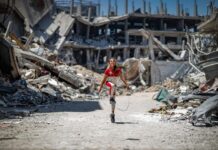
According to the UN, Israeli forces killed civilians, demolished hundreds of homes, damaged roads and other infrastructure, cut water and electricity supplies, restricted humanitarian access and went from house to house ordering Palestinian residents to leave.
By October 2025, approximately 52 percent of structures in the Jenin refugee camp had been destroyed or damaged, compared with 48 percent in Nur Shams and 36 percent in Tulkarm.
The three camps are among 19 refugee camps established in the occupied West Bank to shelter Palestinians displaced during the Nakba, the mass expulsion of Palestinians from their homeland in 1948.
‘All go to Jordan’
The UN Human Rights Office said testimony gathered from displaced Palestinians raised further concerns about the purpose of the operation.
Some residents told UN investigators that Israeli officers had informed them there would be no more refugee camps and that they should “all go to Jordan.”
On February 23, 2025, Israel’s Defense Minister ordered Israeli forces to remain in the three camps and declared that Palestinians expelled from them would not be permitted to return.
According to UNRWA, approximately 33,362 Palestinian refugees from the three camps remained forcibly displaced as of July 2026.
The Human Rights Office said the scale, duration and systematic nature of the displacement raised serious concerns that the crime against humanity of forcible transfer may have been committed.
The report also pointed to Israel’s use of airstrikes, armored bulldozers and controlled demolitions to make sections of the camps uninhabitable.
Such actions, when carried out without imperative military necessity to displace residents and prevent their return, are prohibited under international law, the UN said.
They also appear to constitute collective punishment and raise concerns of ethnic cleansing, according to the report.
‘Expel as many Palestinians as possible’
UN High Commissioner for Human Rights Volker Türk said the manner in which the Israeli operation was conducted indicated a broader objective.
“The way Operation Iron Wall has been conducted suggests its aim was to expel as many Palestinians as possible and to make way for more illegal Israeli settlements, in further violation of international law,” Türk said.
“Israel must end its 59-year occupation of Palestinian territory and halt any efforts to forcibly displace more Palestinians and to further break the contiguity of a future Palestinian state.”
Türk also pointed to the International Court of Justice’s conclusion that Israel must end its unlawful presence in the occupied Palestinian territory as rapidly as possible.
The UN report warned that the forced displacement should therefore be understood in the broader context of Israel’s prolonged occupation and expansion of illegal settlements across the occupied West Bank.
102 Palestinians Killed
Israeli forces killed 102 Palestinians, including 21 children, during Operation Iron Wall over the period examined by the UN.
Those deaths represented 46 percent of all Palestinians killed by Israeli forces in the occupied West Bank during the same period.
The report documented Israeli forces’ use of airstrikes, combat drones and shoulder-launched explosive projectiles, describing them as weapons designed for warfare rather than law enforcement.
According to the UN, many unarmed Palestinians who posed no apparent threat were killed or injured.
Among them was Sondos Shalabi, who was eight months pregnant when Israeli forces shot her dead as she attempted to drive away from Nur Shams refugee camp.
Ten-year-old Saddam Hussein Rajab was shot in the stomach in Tulkarm while waiting for his father so they could go to a mosque together.
Ahmad Nimer Al-Shayeb (43) was shot while attempting to leave Jenin by car.
In another incident in Jenin, Israeli forces shot a two-year-old Palestinian girl in the head while she was eating dinner with her mother and aunt, killing her.
Rules of engagement loosened
Israeli authorities have claimed that those killed during the operation were “terrorists.”
The UN report, however, highlighted evidence contradicting that characterization in individual cases.
An Israeli internal investigation into the killing of Shalabi reportedly found that soldiers shot the eight-month-pregnant woman because she was looking suspiciously at the ground.
The incident came after the Israeli military reportedly loosened its rules of engagement in the occupied West Bank to allow soldiers to fire live ammunition at people suspected of “messing with the ground,” based on concerns that they could be planting explosives.
More than a year after their mass displacement, residents of the three refugee camps continue to be barred from returning to their homes.
The UN said Israel must halt further forcible displacement and comply with its obligations under international law, including ending its unlawful presence in the occupied Palestinian territory.
(TPC, UN Human Rights Office)
